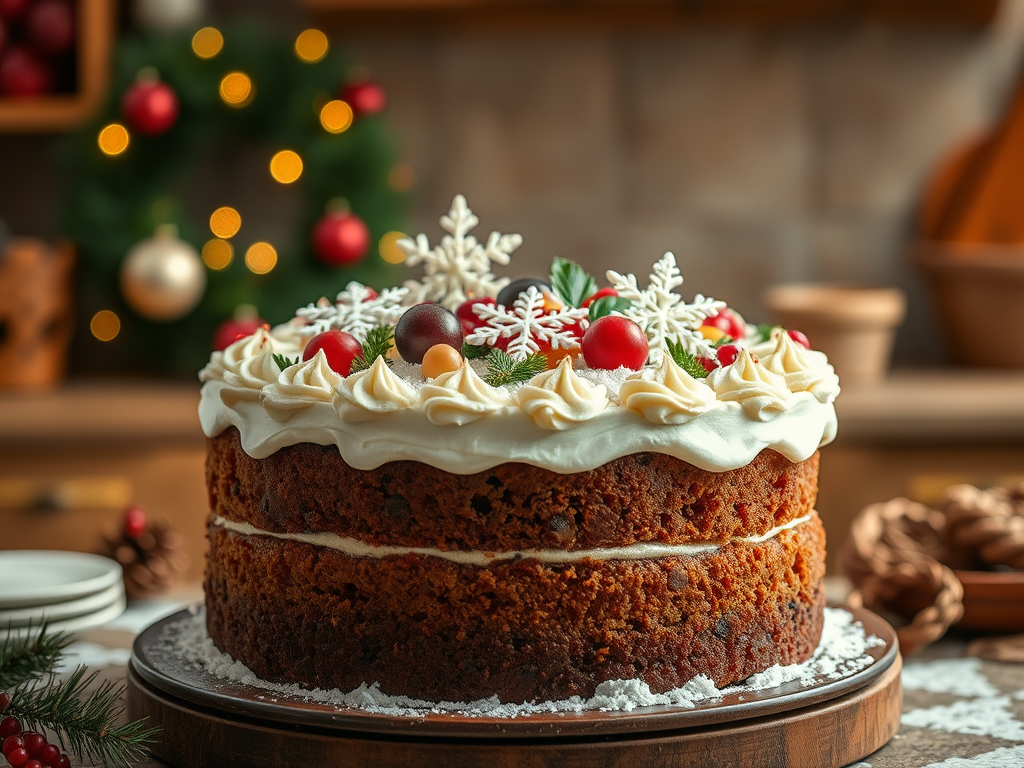
Wow, Christmas is here!! For me, this festive season is all about joy and cheer, decorations and Christmas cake. For years, I watched Christmas cakes being made long before Christmas arrived.
The Christmas cake mixing ceremony marks the beginning of the festive season. It is rooted in tradition, togetherness, and shared intention. Families, friends, or colleagues come together to mix dried fruits, spices, and spirits. Each person takes a turn to stir the mixture. This often happens while making a wish. More than a culinary ritual, it celebrates collaboration and patience. The ceremony embodies the belief that when many hands and hearts contribute, the final outcome is richer and more meaningful. The fruits are soaked quietly and kept aside. The mixing is slow and deliberate. The baking takes hours, not minutes. And even after the cake is done, it is fed patiently, week after week.
A few months back, I witnessed this ceremony. As I watched the bowl being passed around, it struck me how closely this ritual mirrors leadership in action. A great outcome is not the result of a single person’s effort. It emerges from shared ownership and diverse contributions. It also requires the patience to let things mature over time. Leadership outcomes resemble the Christmas cake. They deepen in value when people are invited to participate. The process gains clarity when intentions are clear. We trust the process rather than rush the result. Not in the spotlight. Not in grand moments. But in what is done early, consistently, and with care.
Great leadership, like soaked fruit, needs time to mature before it can truly enrich
The most important step in a Christmas cake happens when no one is thinking about celebration. Fruits are soaked months or at times a year in advance. Alcohol slowly penetrates each piece, softening it, deepening it, changing it from within.
Skip this step, and no amount of decoration can save the cake.
This is where leadership truly begins.
I’ve seen leaders who want engagement without trust, performance without preparation, results without relationships. Everything looks fine on the outside, but it doesn’t stay with people. Great leaders understand that impact is created quietly, long before it’s visible. They soak their teams in clarity, belief, and opportunity, so when the moment comes, the flavour is unmistakable.
I once worked with a business head who was widely admired during stable times. Articulate. Decisive. Confident. But when the organisation went through a sudden restructuring, something changed. Trust eroded quickly. People became cautious. Conversations shut down.
What became visible was not the crisis but the lack of prior investment. Feedback had been transactional. Relationships were conditional. Culture had never been soaked.
In contrast, another leader I worked with barely spoke in townhalls. However, they spent years having quiet, honest conversations. They engaged in these conversations even when they were uncomfortable. When pressure hit, the team stood together instinctively.
These are the soaked fruits of leadership. When pressure comes, leaders don’t rise to the occasion. They fall back on what they prepared.
Mixing the Flour: Structure Without Suffocation
Flour gives the cake its body. Too little can make it runny and too much makes it heavy and flat. Not only the quantity but equally important is the way it is mixed as overmixing ruins the texture.
This reminds me of some the leaders I have seen struggling. They demand results the way some people cook in a hurry, constant stirring, constant checking, constant pressure. They turn up the flame and hope for the best. Everything is tightly controlled. Instructions are clear. Effort is visible. Yet something essential is missing. The team complies, but they don’t rise.
Great leaders understand what good bakers know: structure is necessary, but interference is costly. Once the ingredients are aligned, you mix just enough – and then you stop. You allow space for the batter to settle, for air to do its work.
Some leaders mistake freedom for the absence of structure. Others believe control guarantees results. Both miss the point. Strong leadership provides clarity, boundaries, and priorities so people feel secure. Then it eases its grip, trusting capability to take form.
The best leaders don’t keep stirring. They know when to step back. They let the work rise. They trust the mix.
The Spices: Small Behaviours That Define the Flavour
No single spice defines a Christmas cake. It is the balance of cinnamon, cloves, nutmeg, ginger. Each subtle, each essential.
Leadership works the same way.
Over years of assessing and debriefing leaders, I have noticed a pattern. It is rarely the strategy that damages trust. It is the tone, the timing and, believe it or not – the silence. A raised eyebrow. A hurried response to a genuine concern.
Leadership flavour is created in small moments:
- How a leader listens when someone hesitates
- Whether feedback carries curiosity or judgement
- How mistakes are handled publicly and privately
- Who is acknowledged when outcomes are positive
One overpowering behaviour like control, impatience or ego, can dominate everything else.
People may forget what you said in a townhall. They never forget how you showed up when it mattered.
Baking Time: Why Leadership Cannot Be Rushed
A Christmas cake is baked slowly, at low heat. Increase the temperature and it may look done on the outside, but it remains raw inside.
Leadership development follows the same law.
I have seen organisations demand “ready-now leaders” without allowing people the time to learn, fail, reflect, and grow. The result is leadership that looks confident, but cracks under pressure.
Depth takes time. There is no shortcut. Urgency may deliver speed. Patience delivers substance.
Feeding the Cake: Leadership Is Never ‘Done’
Even after baking, the cake needs attention. Small amounts of alcohol are added periodically to keep it moist and deepen flavour.
Leadership relationships are no different.
Trust fades without regular nourishment. The check-ins, appreciation, honest conversations, and presence. One-off initiatives don’t sustain engagement. Ongoing care does.
Leaders who stop feeding the cake wonder later why their teams feel dry and disengaged.
The Tradition Behind the Christmas Cake
The Christmas cake began as a humble porridge meant to nourish through winter. Over centuries, it evolved into a rich cake made collectively. It was about families gathering, recipes passed down, patience honoured.
At its heart, the tradition was never about indulgence. It was about continuity.
Leadership, too, is an act of continuity. We inherit cultures, systems, and people – and leave them shaped by how we led.
A Classic Christmas Cake Recipe
Ingredients
- 500 g mixed dried fruits (raisins, currants, sultanas)
- 100 g mixed peel
- 100 g glace cherries (chopped)
- 120 ml rum or brandy
- 250 g unsalted butter (softened)
- 250 g brown sugar
- 4 eggs
- 250 g all-purpose flour
- 1 tsp baking powder
- 1 tsp cinnamon powder
- ½ tsp nutmeg
- pinch of grated ginger or ginger powder
- ½ tsp clove powder
- Zest of 1 orange
- 1 tsp vanilla extract
Method
- Soak fruits with alcohol at least a few months in advance.
- Cream butter and sugar until light.
- Add eggs one at a time.
- Fold in sifted flour, baking powder, and spices gently.
- Add soaked fruits, zest, and vanilla.
- Bake at 150°C for 2.5–3 hours.
- Cool and feed weekly if desired.
Closing Reflection
Though a Christmas cake is shared during celebration, it is shaped in solitude, patience, and care.
Leadership is no different. It is built when no one is clapping. When decisions are inconvenient. When consistency matters more than charisma.
So as you cut into a Christmas cake this season, pause for a moment and ask yourself:
- What have I been soaking quietly this year?
- Which spices do people associate with my leadership?
- And what will remain when the heat is turned up?
Because long after the decorations are gone, both cakes and leaders are remembered for one thing alone: Depth.

Leave a Reply